

.svg)
Why Selling Will Always Be Human
.png)
.jpg)


I became fascinated with discovery. The magic really happens when you start to ask those second and third-level questions...all the juicy stuff comes out then...[And what] I would like to see AI do is allow reps to spend more time developing those relationships and understanding customer needs.
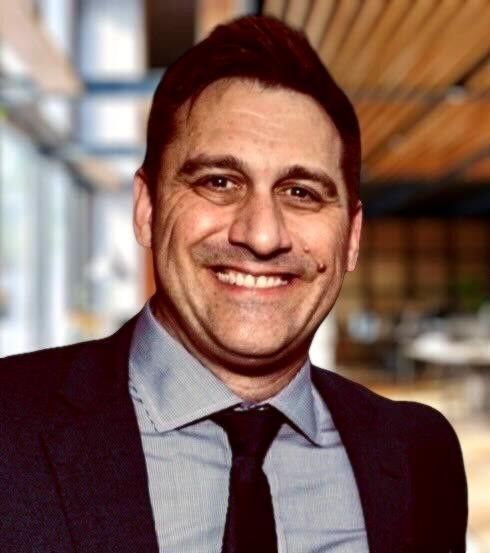
In this episode, Remy Piazza breaks down why selling will always be a human game. Trust, he argues, comes down to two things: are you a good person, and are you credible? No technology replaces that. Remy started his sales career at Xerox, where he learned something that shaped everything that came after: stop talking about your product and start understanding your customer's problem. And to do that, you need to learn the art of discovery — open-ended questions, the 80/20 rule, and the magic of second and third-level follow-ups that uncover what really matters. That foundation stuck with him across 25+ years spanning telecom, fintech, and now consulting as Principal & CRO at Powerhouse.
We dig into how GTM silos form between sales, marketing, and customer success, and what it actually takes to break them: one shared revenue number, joint planning around a common ICP, and metrics that keep everyone honest. Remy also shares why pattern recognition is an underrated leadership superpower, and how over-engineered processes create the very friction they're meant to eliminate. On AI, he points to back-office automation, like eliminating manual CRM data entry, as where it's genuinely working, freeing reps to spend more time in front of buyers instead of behind a screen. He closes with advice to his younger self: sometimes the best promotion is the one you don't take. Don't outsell your team: out-coach them.
ELIO NARCISO:
Hey everyone. My name is Elio. I'm the co-founder and CEO at Scalestack and welcome to the Revenue Engine Masters podcast. We dive deep into Go-To-Market Sales, SalesOps and cutting edge ways in which we are transforming the way Go-To-Market is done today, and I'm joined today by Remy Piazza, Principal and CRO at the Powerhouse Consulting Team.
He’s a seasoned Chief Revenue Officer with 20–25+ years of experience leading GTM in technology. I know it’s hard for me to admit the length of experience too. But he’s consistently helped companies grow faster, and now he helps CEOs and founders scale revenue through his consulting firm, Powerhouse.
You've had lots of different experiences in a lot of different industries. First of all, Remy, welcome to the podcast. Anything that you want to add to the intro, any highlight that you think we should make sure that people know about you.
REMY PIAZZA:
Are you asking me to help edit, or are you asking me to add something?
ELIO NARCISO:
No, no, no. I’m asking if there’s anything else you’d add. And you’re of Italian descent—I’m Italian originally, so we talked a lot about Italy… maybe moving there someday. Maybe..
REMY PIAZZA:
No, no, no, I think that's good. I would, yeah, I think that's perfect. Yes. Yeah. Maybe man, maybe. Yeah.
ELIO NARCISO:
I'm always curious about how we get here? So if you want to tell us a little bit about your journey, I mean, you've done telecom, fintech, now you're doing consulting. What's been the common thread that you can identify across all the different experiences and what sort of prepared you for this moment about what you're doing right now.
REMY PIAZZA:
Yeah, yeah, I've always had a really insatiable level of curiosity. That's something that's always, that's just part of my personality. I think I started my career off at Xerox, which is really, I would call the godfather of solution selling. They were selling commodities back in the 70s, 80s, 90s—up through today—in a very value-added way.
ELIO NARCISO:
Yeah.
REMY PIAZZA:
When I joined them, what amazed me is they started with the customer first and said, what problem is your customer trying to solve? And then re-engineered it backwards to create a sales process. And of course, the way that they did that was a differentiator, right? As opposed to just talking about features and functionality.
They taught that the solution selling was actually a differentiator in a very commoditized industry. But it also taught me that it's not about what you sell, it's about the problem that you're trying to solve for your customer. And I thought, wow, that's like for me, that was mind blowing.
And I was lucky enough to get connected with a senior rep who was exceptionally good at the discovery part of the call. And so I became fascinated with discovery. And I saw him operate when we went on joint calls. And I just thought he was a wizard. said, Michael, you have to teach me that. And he would spend a lot of time with me. And I learned to perfect as best I could. It's something you need to keep working on, but I really wanted to become a student, a master of discovery. And it helped with my curiosity and I loved learning about customers.
And I guess one of the reasons why I've jumped industries is because first of all, somebody said to me early on in my career, you really need to pick an industry and go deep. And I just thought that that sounds incredibly boring to me. I have no desire to do that. So I, I would, I wanted to learn about different industries. I wanted to learn about technology. I wanted to learn how they did business. And so I moved around and I candidly, I think it made me a better leader and it made me a better person as well because I could take different things from different industries, right, and create new ways of going to the market, create new ways of dealing with issues.
So for me, it was always about learning and I think what I really love is building systems that really help turn chaos into growth. That's what it's all about for me, turning the chaos into systems. And that's what I love.
ELIO NARCISO:
Wow. So much stuff for me.
First of all, I didn't know you started your career at Xerox. I missed that in the prep for this. And, obviously Xerox, I mean, an amazing company. Apple, you obviously know the story about Steve Jobs touring Xerox park where the mouse was invented, the graphic interface was invented and so many other things.
And it's fascinating that you say they essentially work backwards from the customer problem to identifying a solution. It's crazy to see that they sort of missed so many innovative ideas that they had in their backyard and other people like Apple took them to market.
When you were talking about working backwards—I worked at Amazon for a portion of my career and that's basically what Amazon is obsessed with—the customer obsession is really important.. Let's first understand what the customer needs and work backwards from that to retrace the steps that are needed to deliver that experience, that is product, service, etc., etc.
First question or sub questions about Xerox, where do you think that they lost? If this was such a strong culture when you joined as early in your career. Where do you think that they lost it? The Xerox, I mean...
REMY PIAZZA:
Yeah, I don't know. It's a good question.
Honestly, Elio, I don't know if I really know. I guess maybe they got to a point where when you become a public company, you start working for shareholders and quarterly dividends and profits and maybe some of that innovation and some of that risk taking starts to get curbed and then eventually maybe that's it but I really don't know.
ELIO NARCISO:
Yeah, or maybe this huge business that they had, they went into autopilot. And so it was very difficult for new businesses to grow because there was this crazy profitable business that went on its own. And so any new idea had to be confronted with the reality of such a huge business, huge profit margins and stuff.
The other thing that you say is super interesting is the discovery. I love the discovery process as well. And I think you said curiosity, right? So I feel that if you're not curious about this job, you shouldn't do this job at all. Meaning Go-To-Market. I think Go-To-Market requires curiosity as probably the most important element.
REMY PIAZZA:
Yeah. Yeah.
ELIO NARCISO:
You need to care about your customers. You need to be curious about them. You need to be able to ask the questions that will bring you closer to understanding their reality. And then you can insert or try to insert yourself in that reality to see how you can help.
In that discovery, what are the key questions that even in a first call, you try to get out of a prospect or a customer. What are the things that you absolutely need to have a good understanding of by the end, after you have a first interaction with a prospect.
REMY PIAZZA:
Yeah, in the back of my head, I'm always wondering why we're here or how you are, but you opened up with a great question, which is: why are we here? That's a great question. What led you to want to meet with us today? Right? What's what, and then start there. And then it's not always that difficult as far as, know, so what's working, right? What's not working? If you know, what you know, if you had an amazing quarter, what would you be high-fiving the team about at the end of the quarter?
First of all, they've got to be open-ended questions. One of the first things that I noticed when I started my career, and usually that you notice with newer salespeople is they ask a lot of closed ended questions. What I mean is you get a lot of yes/no answers, like “Do you like the color blue?” yes/no—instead of asking something open-ended like “Tell me about …” Those kinds of questions are conversational because you want the customer to do 80% of the talking.
I would always aim for that 80-20 rule where they were, and that was drilled into my head really early on, was to make sure that you're asking open-ended questions so the customer's doing 80% of the talking. And part of that's not just about getting the information, it's also about making the customer feel heard, right?
And what that's like when you walk out of a meeting or an interaction where you felt heard. I mean, that's a good feeling, right?
Even when you're at a networking event, you say, “I really like this person”, right? And they're like, Elio, what does he do? And you're like— I don't even know. I just know he's a really great person. It's probably because you were curious about me and you asked all these questions about me. I had an opportunity to tell you about myself and I felt like I was heard. So it wasn't just getting information but it was more about building a relationship with that person and making them feel heard.
ELIO NARCISO:
And I love the point about the open-ended questions that seem fluffy and I've seen maybe less experienced reps being almost afraid of asking those open-ended questions.
Also, because once you ask that question, you have to listen and you sort of have to adapt what you say after that, based on that, you can't just ask the question and not do anything with what they've just told you. Right?
REMY PIAZZA:
Yeah, yeah and you know when I worked at Career Builder years ago, we actually, we called it digging deeper and so, or peeling back the onion, right? We talked a lot about peeling back the onion. These are some pretty dated concepts but they still matter today. With all the tech that we have today, these things still matter, they're always going to matter.
And so, to your point about when you ask an open-ended question and when I was a more junior rep, you'd get, you'd almost have this brain blockage where you didn't know where to take the conversation next. I think that's where the experience and some of the maturity comes from. You can start to ask follow-up questions, secondary level and even tertiary level questions to really help unpack the pain, right? And that's, to me, that's where the magic really happens is when you start to ask those second and third level questions, all the really juicy stuff comes out then. That takes practice, it takes training. But, and I think, no matter what technology you've got in place today, I don't think anything will ever, I don't think that can be replaced. I don't, and for two reasons.
One is: Selling is still very human, right? So you still need to know whether you're doing it over Zoom or whether you're doing it in person.
Selling is an emotional thing. It's not just a logical thing. And so it's a people thing and because it's a people thing, people are gonna still buy from people that they trust.
And to me trust has two elements. Element one is are you a good person? Right? Are you ethical? Are you moral?
Element two is are you credible? Meaning, do you know what you're doing? Are you equipped or skilled to provide me with a solution? And these are still very human things. And so selling, regardless of how much AI we have or what the technology is, will always be very human, in my opinion.
ELIO NARCISO:
The secondary and tertiary questions are so important. I agree. I learned this deeply at Amazon again, not so much in selling, but in hiring. Amazon is crazy about hiring. Right. And so I became a bar raiser while there. So I'm passionate about hiring and stuff. And one of the things that you have to do is really, if you get an answer, don't be satisfied. Like, okay, yes, I increased revenues by 30% at my prior company and beat my quota. And so then, okay, what was your quota?
And so what about the others? What about your peers and then what did you think worked? What didn't work? And what did you learn? Blah, blah, blah. So go a level deeper in order to get to the truth or as close to the truth as is possible and feasible. Really interesting stuff. I want to move to the next subject, the last question about this, so curiosity for sure. What other traits do you think? is really indispensable to do this job.
REMY PIAZZA:
Yeah. Yeah. Yeah.
With GTM. I think for me pattern recognition or spotting growth levers that others miss is really, pattern recognition is really key.
I talked about this in one of my posts. There's two types of knowledge. There's fluid knowledge and there's crystallized knowledge. Fluid knowledge is more, one plus one equals two. It's about how fast you respond to things like that. Crystallized knowledge is usually built over time and you start to recognize patterns and it gives you the ability to see three steps ahead before somebody even knows what's coming at them. I mean, I think that a lot of that's based on experience. It doesn't always necessarily equate to, I'll call it age, but sometimes it does, but it's pattern recognition.
And I think that's really underplayed is pattern recognition. You still need to execute relentlessly but I still think that moving fast is important from idea to action of course but pattern recognition is really critical.
You'll be able to pinpoint opportunities and avoid landmines when you can exercise that kind of pattern recognition and that's something that you don't always hear a lot about, but it's critical, especially in leadership roles, it's critical.
ELIO NARCISO:
It's a very sophisticated thing. I think it's a combination of things, which again, I think you are, it's interesting where you say, because you cannot do anything of this well, unless you develop it over time. So what you just said about pattern recognition to me is like, okay, you need to look around corners. And so, to do that, you need to be curious to analyze what worked, what didn't work and try to see around the corner. Or also trying to be right. I think that this is how we often forget that success is typically that we always make mistakes, but you want to be more right than wrong.
And so the ability to over time improve on that is very important and to develop the judgment that is required to be more right than wrong. Over time I made plenty of mistakes but I certainly could not have done Scalestack without those mistakes and having learned from them. We have this saying in Italian which is errare è umano, perseverare è diabolico which really means you can make mistakes, that's very human.
But if you make the same mistakes all the time, that's evil. You have to learn from your mistakes.
REMY PIAZZA:
Yeah. Yeah. Right.
Yeah, yeah, no question.
ELIO NARCISO:
So pattern recognition, absolutely crucial. Very good.
We went from a very philosophical start to maybe I want to go to something directly, not that it wasn't useful, but actually very useful, but directly applicable to what people that may listen to this are thinking about.
Before we started recording, we talked about silos, silos between sales, marketing, and customer success, and you have seen this develop at many companies, right? And you were starting to tell me about things like, how do you try to solve those problems?
The question is really in two steps. First is, how do you think that these silos are created? And the second is, how do you solve that so that people start collaborating more?
REMY PIAZZA:
Yeah, so it's that cross-functional Go-To-Market that everybody's looking to achieve, right? So yeah, the question is, yeah, how do you break down silos across the revenue team, which for me are sales, marketing, customer success, right? I think for me, you've got to start with one shared revenue number and you have to put vanity metrics aside, right? So some people think that we'll use something like, I don't know.
Facebook likes or LinkedIn likes, right, those are vanity metrics, right? So I think everyone needs to start by being evaluated with that revenue number regardless of where you sit within the organization. I think that's one. I think you've also got to really, I call it, maybe not force, in some cases you really have to force joint planning, right? Like the same, everyone defines the ICP the same, everyone's following the same buyer journey map, and you've got a shared accountability. That's number two.
That's got to be in the planning stages. I think three is just unifying metrics, things like paying attention to the big metrics that we should all be evaluated on.
Each department's going to have metrics that they're going to evaluate themselves on, but I think at a unified Go-To-Market level you need to look at things like revenue, you need to look at things like maybe CAC payback, right? You need to look at things like net revenue retention, maybe things like pipeline coverage versus target. You've got to pick and you've got to dashboard those and review them as a GTM team at whatever cadence, could be weekly, monthly, quarterly, whatever the cadence is, but those are, you've got to pick some unifying metrics that the entire GTM team is evaluated on regardless of where they sit in the organization.
If I had to sum it up, it starts with one shared number, leave the vanity metrics alone over here. You really have to force joint planning, making sure that basics like ICP, customer journey, those things are everyone defines those things the same. And then make sure that you've got some sort of GTM dashboard and you've got some unifying metrics, things like NRR, CAC, ARR.
Those are just some examples. There's others. But those are the three things that I would really focus on.
ELIO NARCISO:
And when do you start seeing the magic? What type of executive, I mean, you work with lots of companies and executives at these companies. So where do you start seeing magic happen? You know, what do you want to look for?
They talk about customers, maybe changing the way they present to each other what they have been doing, or where do you start to see the magic happen?
REMY PIAZZA:
Yeah, that's actually a really good question. And oftentimes, you see it in pipeline reviews and forecasting. Honestly, you see a lot of that. So if there's a belief issue, for example, right, you start to see things, you can feel it in the room, whether you're on a Zoom or you're in the room with them, you can start to feel it, pipeline may look full, but deal velocity, right, starts to slow, right? Close rates dip and then forecasts feel a lot more like wish lists than commitments. That's where you can start to see that. I mean, in conversations, you'll hear a lot of hesitation. Oftentimes you'll hear, the product can't do that.
You'll hear things like that when there's a belief issue or customers don't get it. That's the other one I love. The customer just doesn't get it. They can't connect the dots between the product and how we solve that problem. So that's not objection handling. That's a confidence problem. But I also look for consistency.
If you've got 10 reps giving me 10 different versions of the value, that's a big red flag. Lack of belief usually shows up in lack of alignment.
So those are the things, that's where you start to see the lack of alignment. So hearing that, you know what areas to pinpoint, right? And it goes back to what I said: do we identify ICP and things like that the same?
ELIO NARCISO:
Mm-hmm.
REMY PIAZZA:
But I guess the first step is really telling the truth, right? You're not gonna, as a leader you can't spin. You've got to be able to tell the truth. I know that's an incredibly simple thing to do but it's critical. People can feel whether or not you're authentic.
And you can't spin. You can't spin reality. Just be honest with them. Get brutally honest about where we are. If there are product limitations, talk about them, right? If there are pricing challenges, talk about them. If there's process friction, talk about that. Just be honest. I think that's the first thing to do when you're rebuilding confidence. And then try to create quick wins, right?
When reps even close a handful of small insignificant deals with the right ICP, right? Use that as momentum because that momentum starts to breed confidence and be public with that stuff. Yeah, case studies, logos, testimonials, use all that to start building out the collateral and even get a real customer on the call with your revenue team and talk about how this solution solved their pain. It's not only your word, use a customer, even if it's a small win to say, yeah, this solution that Jane sold us is helping us by doing this, this, and this, and that'll help. That's almost like an internal pep talk from the customer. And then, I guess on a more practical level, know, just make sure you're investing in things like enablement, right?
Enablement's really critical. Simplify the story, sharpen the demo flows, give reps tools, the tools they need to make them feel they're out there and they're winning. Make sure they know the product inside out, and then from there, think belief will naturally follow.
ELIO NARCISO:
Yeah. Yeah. I was about to—sorry. I was about to comment about maybe broader enablement, like Ops. We talked about the silos. We talked about the metrics. We talked about being honest. I find that the best Go-To-Market teams have really good Ops teams that sort of keep them honest, circulate the data as is.
You can spin it and they are not there to spin it, but just to look at the data and then try to identify potential problems. And they are very credible as partners in enablement for sure. They can help a lot, but also generally as trusted partners to the CRO,not talking with them or as if they were inferior components of the conversation but important people at the table.
REMY PIAZZA:
Yeah, I'll say this too, and this might be a little controversial for some of the people listening, but I think the best operations people, the best enablement people think and look at the revenue team or the salespeople, as their customers. And so they're naturally curious. Then they think about the customer's customer, which to me is always next level thinking, right?
And so who's the salesperson's customer? Well, it's the company's customer. And so they're not only listening to the customer, the salesperson, but they're obviously listening to the customer. What that helps avoid is what I call theoretical over-engineering of processes. Theoretical over-engineering of processes creates friction. It creates friction when the whole idea behind the creating process is to eliminate it.
But if you're not really listening to your customers and your customer's customer, whether you're an operations person inside or whether you're a marketing person. Focusing on the customers in the market, you're going to create theory and then you're going to start to create processes that are based on theory and not reality.
And that's where I start to get, and I think some CROs are starting to see a little bit of over engineered processes, over engineered buyer journeys, over engineered sales process, over engineered forecasting process. And that creates friction when the very purpose of designing those systems in the first place is to remove friction.
ELIO NARCISO:
Yeah, simplicity always wins. I mean, you talked earlier, I don't know if we were already recording or not, but the chaos now that exists in these Go-To-Market systems. And I agree with you that a lot of the stuff that we see at Scalestack with customers, like over-engineering, things that are clearly too complex and for maybe an output and ROI that is minuscule. It's like, why are we doing this? I mean, you should challenge what you're doing constantly. And I think that it goes along with that thought about,if you have a good strong Ops team, things are not perfect. They will never be perfect, but you have a strong partner that can help you with your customers, which are the company's customers.
REMY PIAZZA:
Yeah, right.
ELIO NARCISO:
Very cool. I read today an interesting post on this, on how each component of the sales process is part of the whole. And so, and this is Dave Kellogg, who is a guy that I admire and is an advisor. SDR sells the meeting, SE sells the product and AE sell the process.
And I thought it was an interesting way of framing how people contribute to this because, I mean, to the end customer, everybody's selling something, but it's not everybody selling the product. And so I liked that and I mean, this resonated with me.
I mean, we sell to enterprise customers and the role of the AE is really much like managing the process really well. Asking those questions, understanding processing them, making sure that they circulate those insights inside to all the people that are working on the deal.
I thought it was an interesting way of framing it. In your experience, when you work with customers, how do you advise them to use SDRs, if you advise them to use SDRs or SEs or AEs, maybe some of the ratios that you want to see there, what do you typically tell your customers that they should operate on?
REMY PIAZZA:
So I agree, we'll call it Fordism for GTM, right? Everyone's got a part to put on the car. I mean I get that. I think from an operational efficiency standpoint, I think it's important. I do think that regardless of where you sit in that, you've got to understand the whole process, right? You've got to understand how the parts fit together.
If you don't understand the whole, it's really difficult for you to fathom why people act and do and are motivated the way that they are. And so yeah, I think you've really got to make sure everyone understands the entire process, right? And of course where they fit into it and why that's important, but understanding the whole process is key. I think sometimes, yeah.
ELIO NARCISO:
I love that.
It's a great point. I love the whole.
I don't think it's controversial. I've actually had to push my co-founder who owns product and tech. Hey, sometimes even the engineers should come to customer calls or product people, because if they are building without the context, I mean, who are we building this car for? Like you said.
REMY PIAZZA:
Yeah. Yeah.
ELIO NARCISO:
I'm not just building any car, I'm building a specific car, a specific model of the car for a specific customer.
REMY PIAZZA:
Yeah, yeah, it's key. And one of the questions that I used to ask when I was looking at different CRO roles at different companies is talk to me a little bit about the feedback loop between product, the internal team, the revenue team, and the customers. And how many times does the product, how often does the product go on a customer call?
Because I think to your point, if you're inventing things with an inside-out perspective versus an outside-in perspective, you might be making some really cool stuff, but if it doesn't help the customer, if it doesn't solve the problem, then…
ELIO NARCISO:
Nobody cares. Yeah.
REMY PIAZZA:
No one cares. No one cares. So I think that's a good point. And you need those feedback loops in place and not just once. I mean there needs to be a regular cadence where that's happening all the time.Again GTM to me is like an organism. It's dynamic. It changes. It's not a set it and forget it.
Just like a product that evolves over time, GTM will evolve over time. Product-market fit evolves over time.
As soon as you bring a new product or you move from a single product to a platform, do you have product-market fit? Right. And so you have to go back constantly. It's a circle, right? It's not this linear journey. It's a circle. And GTM is no different. It's a circle. And you need to revisit these things constantly in order to really understand what's happening in the market, understand what's happening internally.
ELIO NARCISO:
Yeah, your ICP has changed, yeah.
Absolutely. And speaking of the evolution of Go-To-Market, I'm starting to see, I mean, we're building on AI and obviously this is top of mind for everybody, but I'm starting to see in a lot of Go-To-Market orgs, like Gen AI type of titles, right? So like Gen AI, solution engineer or sales strategy, AI applied. In your experience, I'm curious about the practicality of this.
Where have you seen AI applied well so far? Because there was this big MIT study, maybe back in August, that said, oh, 95% of the investments in AI at the enterprise level are failing. And I wrote a post about it because if you dig deeper, that's not really the reality. But it made some specific points. And so curious in your experience with customers, where have you seen success?
REMY PIAZZA:
Yeah, well, I will say this.
I mean, in my experience, a lot of companies are still out there researching it.. There's still a lot of companies out there that are sort of poking at it a little bit and still, they haven't really implemented it yet. I think the vast majority of companies are like that. I think there are certain sectors like tech that are ahead of the game. But when it comes to AI and GTM, where I've seen it work, I've definitely seen it work.
ELIO NARCISO:
…in AI.
REMY PIAZZA:
Ultimately, and it all depends on why we are implementing AI in the first place, right? So you need to start there. Where I've seen it work is a guy like Kyle Norton, right? He talked a little bit about this. He talked about, we wanted to free up the reps' time so they spent more time in front of customers selling. So what it meant was, and where it's working for, people like Kyle and others is those back-office processes, right?, like entering information into the CRM and so they've started implementing AI, they've now taken some of that off the rep, off their plate, and so those are the things that I've seen work well.
But again, if you don't have clean data, that's an issue. Right? It's the old saying: garbage in, garbage out. It's the same thing. You're going to be creating processes with bad data, which is gonna give you bad results. And so for me, getting that data cleaned up first is really critical.
And I think you should always, if you're launching an AI program, the ones that I've seen launch best, actually, they have someone that's in charge of it, but then they're also talking to people. People are using AI a lot, reps are out there using AI on their own and figuring it out, how are you using AI individually? Not as a company, but how are you using AI individually?
ELIO NARCISO:
Yeah, as an individual contributor.
REMY PIAZZA:
Yeah, as an individual contributor. And then figuring-out that, helps you level set where people are, in terms of their comfort level with it. And then you can start to think about how you're going to implement AI at a company level. But to answer your question, Elio, I mean, I've seen it work by taking away a lot of the administration, like entering information into Salesforce.
You know, that's a big one. And the idea there, again, you've got to start with what are we trying to accomplish here? And I like the way Kyle Norton talks about it because he always starts this conversation by saying, this is what we wanted to achieve, what we wanted to get, we wanted to free up 70 or 80%, I believe he said, of the rep's time to be in front of buyers, which is incredible because most reps right now spend an average of 30 to 35% of their entire week actually selling.
ELIO NARCISO:
Actually talking to buyers, these are all themes that are super dear to me and I embrace them fully. Maybe, I mean, time got away from us.
So we're already on time, but I want to ask you one last question about speaking broadly about AI and also we talked about some of the specific focus on the back office and the importance of getting the data right. And then the motivation for using AI, but let's say a few years from now, people are trying to make predictions.
You and I share that we've been around for a little bit. And we have seen a number of technology waves transforming the way we do business. What is something that you think we can learn from those past cycles that's applicable to AI? You know, the mobile wave, the cloud wave, even the internet, what is there you think can be applied and say, okay, I can predict this about AI.
REMY PIAZZA:
Yeah, well, I always look at this from a philosophical standpoint.
I think technology should enable and not always replace, right? At least when it comes to human-to-human interaction.
I don't think when it comes to selling or GTM, I don't think that the basics have changed. I think they'll always be the same. You know, customers have a problem, you're trying to solve that problem. So how do I spend more time with the customer? How do I spend more time with more customers, understanding their needs and understanding how to fix some of the problems that they're experiencing? And what I hope, what I would like to see AI do is allow people to spend more time developing those relationships, understanding those customer needs, and coming up with real solutions to those problems. And insofar as AI, or quite frankly, any other technology is concerned, if it doesn't do that, then I don't really see much place for it.
And so it's one of the benefits of seeing, being through some of those big technological developments is that you've always got to focus on the same thing. And that is, do I understand my customer's problem and how to solve it? And so I think any technology needs to be focused on that.
ELIO NARCISO:
Very good. Remy, this was great. One last outro question: If you were to go back in time to your younger self, what piece of advice would you give younger Remy?
REMY PIAZZA:
Yeah. Well, so I talked a little bit about this on another podcast I think.
I would say to the individual contributor that is being promoted or has a promotion on the table:
Think about why you want that new role because being a leader and being an individual contributor are very, very different roles”, and I think sometimes the promotion that you don't take is the best promotion you can get.
I became a leader too quickly and realized that I still had a lot of an individual contributor in me and I had a big ego that needed to be fulfilled and so I ended up going back to an individual contributor role for another five years after I ditched that first leadership role because I wasn't ready.
I would say to the new manager,”Don't try to outsell your team, out-coach them”. That's the critical part. Frontline managers should be spending at least 70% of their time coaching reps and not selling deals, right? And that's the big mindset shift.
ELIO NARCISO:
It's a big transformation, yes.
REMY PIAZZA:
So, you're great at selling, now you need to be great at coaching and leading, giving feedback, all that good stuff. And so that's a big mindset shift.
Make sure you're ready for that promotion. And sometimes the best one is the one you don't take. And then again, don't outsell your reps, out-coach them.
ELIO NARCISO:
Remy, this was great. Thank you so much for your time.
I hope you enjoyed it as much as I did and thank you everyone for listening.
REMY PIAZZA:
Thanks, Elio. Yeah, this was fun. Thanks.


.png)
.png)


Get the AI engine that fuels your next phase of growth
.svg)


.svg)
.svg)
.png)
.png)
.png)
.png)
.avif)